





























Post-Processing Mastery for 3D-Printed Scale Models


Post-Processing Mastery for 3D-Printed Scale Models
3D-printed scale models offer unprecedented freedom to realize subjects that were previously impractical to produce with traditional manufacturing methods. The real magic, though, happens after the printer has finished laying down plastic or resin. Post-processing is where raw aprints turn into gallery-worthy models with crisp edges, clean seams, and convincing finishes. This guide is a comprehensive roadmap to mastering post-processing for scale models, whether you’re working with FDM (fused deposition modeling) parts, SLA/DLP resin prints, or a hybrid workflow. You’ll find practical workflows, material-specific tips, and techniques you can apply to a wide range of subjects—from aircraft and armor to sci-fi dioramas and miniature figures.
Understanding the Landscape: Materials and Printers
Before you pick up tools, it helps to understand the canvas you’re working on. The post-processing approach differs significantly based on the printing technology and material.
FDM/FFF prints are typically made from thermoplastics such as PLA, PETG, or ABS. They tend to show visible layer lines, have varying amounts of stringing and oozing, and can have anisotropic strength that affects how you handle seams and fills. Supports are usually needed for overhangs and must be carefully removed to avoid gouges. The surface often benefits from sanding, priming, and filling to achieve a smooth, paint-ready surface.
SLA (stereolithography) and other resin-based prints produce high-detail models with smooth surfaces out of the printer, but they come with their own post-processing rituals. Resin prints require washing in isopropyl alcohol or similar cleaners to remove resin from the surface, post-curing under UV light or visible light to achieve full hardness, and careful sanding or smoothing to eliminate layer lines and resin flash. Resin parts are generally more fragile before curing, so handling with care and proper support structures is essential during the post-processing phase.
Hybrid workflows—using resin printing for high-detail components and FDM for larger structural elements—are common. Regardless of your method, the core post-processing philosophy is the same: reveal the best surface you can, preserve the geometry, and prepare the model for paint and weathering with stable, compatible materials.
Tools and Workspace Setup
A well-equipped, ventilated workspace can dramatically improve your results and enjoyment of post-processing. Here’s a practical starter kit and setup considerations.
Essential tools include a hobby knife or flush cutters for removing supports, fine files or sanding sticks, and a selection of sandpaper grits (start rough and move to very fine). For resin prints, a dedicated, well-ventilated area with gloves and eye protection is non-negotiable. For FDM parts, a heat gun can help with careful edge tightening or smoothing, but use it with caution to avoid warping. A small set of precision putties (epoxy putty or cyanoacrylate-based gap fillers) will help fill seams and pinholes. A quality primer is critical; you’ll learn a lot about your model by how the primer settles into seams and surface imperfections. For painting, invest in a basic airbrush or good brush collection, plus acrylic or enamel paints depending on your preference. Masking materials, decals, a hobby knife with fresh blades, and a microfiber tack cloth for dust removal are also invaluable.
Safety first. Work with good ventilation when sanding, priming, or using solvents. Wear a respirator or at least a dust mask for sanding, eye protection for cutting, and gloves when handling resins or solvents. Keep a dedicated set of tools for resin work to avoid cross-contamination with FDM parts. Label containers clearly, and dispose of waste solvents and masking materials according to local regulations.
Foundational Post-Processing Workflow
A clear, repeatable workflow keeps you from skipping steps and helps you build consistency across projects. Below is a practical framework you can adapt to both FDM and resin parts, with notes for material-specific adjustments.
1) Initial cleaning and support removal
Remove prints from the bed and, for resin parts, rinse off excess resin in a bath of isopropyl alcohol (IPA) or the cleaner recommended by the resin manufacturer. For FDM, gently detach and trim supports with flush cutters, being careful near delicate features. Save the supports for potential reuse or compost them responsibly. For resin, after washing, carefully inspect for leftover resin skin or flash and remove it with a soft, fine file or razor, taking care not to scratch details.
2) Surface inspection and defect repair
Examine the model under good lighting. Note any layer lines, sink marks, cracks, or gaps between parts that must be addressed before painting. FDM parts frequently have visible layer lines and seam gaps at part junctions; resin prints may have cure lines or resin flash around supports. Use a suitable filler (epoxy putty, CA glue with microballoons, or resin-compatible putty) to fill imperfections. Allow filler to cure, then lightly sand flush with the surrounding surface.
3) Initial smoothing and contour refinement
Sanding is king here. Start with a coarser grit (around 120–220) to flatten large irregularities, then step up to 400, 600, and 800 grits to refine the surface. Wet-sanding is strongly recommended for resin prints to reduce dust and heat buildup. Be mindful of delicate raised details; you can protect them with masking tape or adjust sanding pressure to preserve edges. For FDM parts, tacky gaps around joints may require additional filler and careful shaping to maintain crisp lines.
4) Seam management and alignment checks
Check seams where two printed parts join. If there’s a visible seam, apply filler and re-sand until the seam disappears or becomes a subtle line. For model kits, alignment pins and pegs can aid assembly, but gaps between mating surfaces still need attention. A smooth, uniform surface is the goal at this stage.
5) Priming and defect revelation
Apply a thin, even coat of primer (spray primer is convenient and reveals defects well). Primer serves two important roles: it protects the surface from subsequent paint layers and highlights imperfections that might have been hidden. Inspect the primed surface under good light. You’re looking for fish-scale textures, pinholes, and still-visible layer lines. Mark and repair any issues, then re-prime to confirm improvement.
6) Final surface refinement
If you still see issues after priming, address them with spot putty and light sanding, then re-prime. Repeat as necessary until the surface presents a uniformly smooth, uniform texture free from obvious defects. A well-prepared surface is the cornerstone of a successful paint job and realistic finish.
Surface Preparation Nuances: FDM vs Resin
FDM models often benefit from a combination of mechanical smoothing and filler. Pay particular attention to layer lines along long panels, the undersides of fins or ailerons, and areas where supports were attached. A light coat of filler primer can help you identify stubborn imperfections and ensure a uniform finish. For wing roots and panel lines, you want to preserve crisp lines while eliminating plastic stitching or small voids.
Resin prints, with their high detail, respond to careful sanding and airbrushing. You can remove micro-scratches with very fine sanding (1000–2000 grit) and, if necessary, a light polish with a polishing compound designed for plastics. Some modelers use flowable putties to fill micro-scratches, followed by a careful re-sand. When shaping edges, aim to preserve sharp corners rather than rounding them over, which can degrade the model’s realism.
Painting and Weathering: Bringing Models to Life
Paint is not simply color; it’s texture, shadow, depth, and realism. A well-executed paint job can turn a technically good print into a visually compelling model. Here are core strategies to master painting and weathering across materials.
Base coatings
Start with a well-thinned base coat, applied in light, even layers. For airbrushed work, 10–20% paint with a compatible thinner is typical, allowing for multiple passes without build-up. For brush work, apply thin coats with long, even strokes to minimize brush marks. Choose colors that match the subject’s real-world appearance and consider how lighting and environment affect tone. Some modellers pre-shade panels with a darker tone along panel lines to provide depth when the top color is applied. This technique is especially effective on aircraft and armored vehicles where panel delineation is pronounced.
Masking and color separation
Masking is essential for crisp color separation on complex schemes. Use thin masking tape and fine scissors to create neat boundaries. For large areas, an airbrush provides smooth gradients and blends. When masking, ensure edges are crisp by pressing down the mask firmly and shielding the adjacent areas. After removing masks, inspect edges and touch up any bleed-through with a fine brush and matching paint.
Detail work and decals
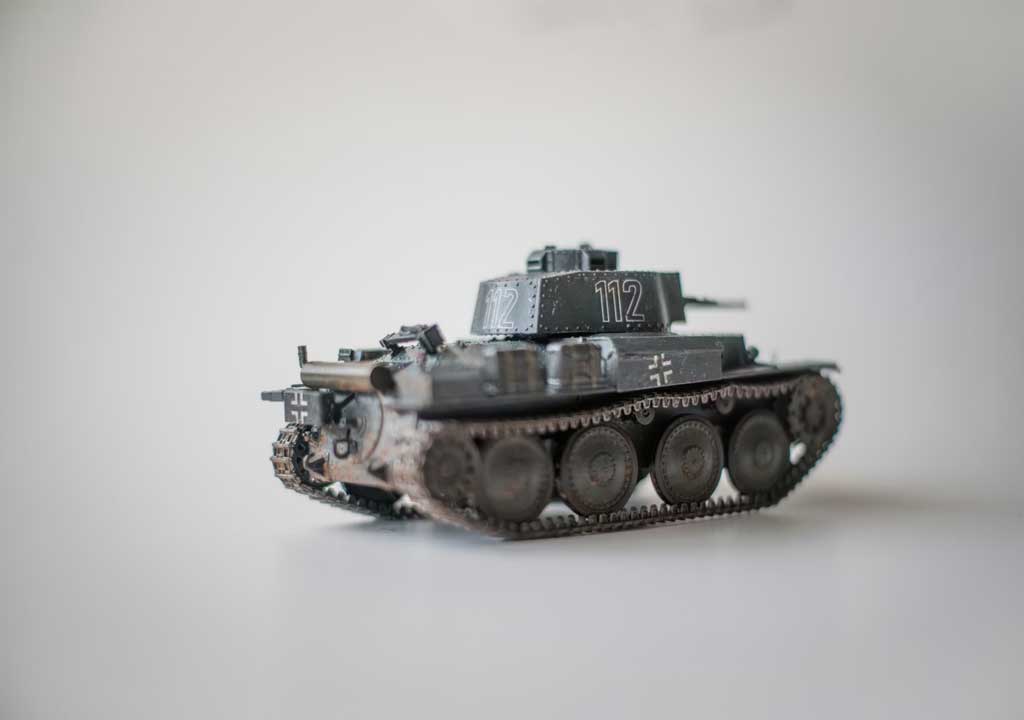
Small details—fittings, instrument panels, rivets—are often best highlighted with precise brushwork or decals. Decals require careful preparation: ensure the surface is dry, clean, and slightly glossy or matching the decal’s adhesive needs. Use decal setting solutions sparingly to conform to curved surfaces, then seal with a clear coat to protect them. For raised details, a light dry-brush with a lighter shade can make textures pop without taking away the fine lines created by the printer.
Weathering for realism
Weathering adds realism by simulating wear, exposure, and use. Techniques include washes, dry brushing, chipping, and pigment powders. A wash uses thinned paint to flow into recesses, creating shadows in panel lines, panel seams, and fastener holes. Dry brushing highlights raised edges by applying a nearly dry brush with a lighter color. Chipping, especially on military subjects, can be simulated with a small brush or sponge by applying tiny amounts of metallic or sandy pigments to edges and high-wear areas. Pigment powders mimic dust and grime and can be fixed with a matte or satin clear coat to prevent flaking.
Sealing and protection
Finish with a protective clear coat. Matte finishes are common for infantry or weathered vehicles; satin or gloss finishes can be used for certain surfaces like glass canopies or polished metals. Clear coats not only protect the paint but also unify the finish across the model. When applying a clear coat, test on a sacrificial piece or a hidden area to ensure compatibility with decals and paints. Layering multiple thin coats yields better results than applying a single thick layer.
Special Techniques for Resin Prints
Resin prints offer extraordinary detail but demand careful handling during post-processing. Here are resin-specific practices that maximize quality and durability.
Curing and handling
Post-curing is essential for resin parts. Cure under UV or visible light per the resin manufacturer’s guidance. Avoid over-curing, which can make the surface brittle or distort fine features. After curing, wash away any residual resin with IPA and handle the parts gently to prevent micro-cracking on delicate features. Avoid bending or forcing parts that aren’t designed to flex; resin is strong but can be brittle under stress.
Surface refinement after cure
Even after curing, you may notice layer lines and faint cure lines on resin prints. Light sanding with fine grits (400–1000) followed by progressively finer sanding can create a factory-finish look. Some modelers use polishing compounds to achieve a super-smooth surface for figures or cockpit canopies. Be mindful of heat: resin can soften under excessive friction or heat from sanding, so keep the sanding dry and cool.
Support removal on resin parts
Resin prints often rely on supports that leave saddle-shaped marks. Remove supports with precision cutters, then sand the contact points lightly to blend with the surrounding surface. Work gradually to avoid gouges. If a support structure intrudes into a delicate area, consider filling with putty and re-sculpting the contour to maintain accuracy.
Finishing Touches: Decals, Basing, and Display
Beyond paint, the presentation of a model matters just as much. Basing, diorama elements, and display considerations can elevate a project from a good model to a compelling scene.
Decals and markings
Decals emulate insignia, numbers, and markings with a crisp realism. Align decals carefully, use setting solutions to help them conform to contours, and apply a protective clear coat to lock them in. For small, curved surfaces, consider cutting decals into multiple pieces to improve adherence and reduce distortion. If a decal silvering occurs, re-wet the area, re-activate the decal, and re-seal with a clear topcoat.
Basing and diorama context
A convincing base complements the model. Simple basing materials like textured paints, static grass, fine sand, or tiny pebbles can add realism. Build a base that complements the subject without overwhelming it. Consider a subtle color palette for the base to avoid competing with the model’s focal points. If you’re building an aircraft, a diorama piece with runway textures or a weathered hangar scene can tell a story about the model’s life or mission.
Display considerations
Protect the finished model from sunlight, dust, and humidity. A steady, climate-controlled display case can extend the life of your paint and finishes. If the model will be handled regularly, consider a more durable clear coat and trap elements like magnets or pins to secure delicate parts without compromising the look.
Common Pitfalls and Troubleshooting
Even experienced modelers encounter recurring challenges. Here are common issues and practical fixes you can apply as you work.
Visible layer lines after priming
Before your primer appears, ensure your model is uniformly smooth. If layer lines persist after primer, it’s often a sign of stubborn surface irregularities or insufficient sanding. Go back to a finer grit (often 800–1000 or higher) and re-sand with care. A fine filler layer under primer can help level the surface, followed by another light sanding and re-priming.
Flat paint or paint peeling on edges
Gloss or semi-gloss priming can help the paint adhere evenly. If paint peels from edges, you may have contaminated the surface with oils or waxes. Clean the surface thoroughly, abrade slightly, and re-prime before repainting. Ensure you’re using compatible paints and thinning ratios to prevent solvent attack on the primer.
Bleeding color under masking tape
Mask edges with low-tack tape and seal the edge with a light coat of primer or your base color before masking. When you remove tape, lift away in a slow, gentle manner to minimize paint lift. For complex shapes, consider using masking putty or liquid-mask products designed for edge retention and flexibility.
Cracking or warping during curing or heat exposure
Avoid rapid changes in temperature and excessive heat, especially for FDM parts. Use a slow, even cure and store prints away from direct sunlight or heat sources during and after finishing. If warping occurs, reheat gently with a heat gun at a safe distance or apply gentle pressure with a flat, non-marking tool as the part cools to help set the shape.
Rupture or breakage of delicate parts during assembly
Disassemble into subassemblies and reinforce joints with appropriate adhesives (CA glue for precision, epoxy resin for structural strength). Consider designing or printing tiny alignment pins or tabs to help with precise assembly in future projects.
Project Pipeline: A Case Study in Post-Processing a Small-Scale Aircraft
Let’s walk through a practical, end-to-end workflow for a 1:72 or 1:48 scale aircraft model printed via FDM and then refined through post-processing. This scenario demonstrates how the techniques described above come together in a typical project.
Step 1: Printing and initial cleanup
Print orientation was chosen to minimize supports on visible surfaces. Supports were carefully removed with side cutters, and residue was trimmed away using a sharp hobby knife. The model was rinsed briefly in water to reduce dust and prepared for sanding.
Step 2: Surface preparation
The surface showed several minor layer lines and a few small gaps at panel seams. Filler putty was used to fill seam lines and minor imperfections. After curing, the putty was sanded smooth with 400 and 600 grit papers, followed by a 1000 grit for a micro-smooth finish. The surface was wiped clean to remove dust before priming.
Step 3: Priming and defect checks
A light gray primer was sprayed in thin, even coats. Under bright light, the model showed a few remaining pinholes and one more seam gap near the fuselage join. These were touched up with a tiny amount of putty and re-sanded. A second primer layer confirmed a uniform surface with no obvious defects.
Step 4: Base painting and masking
The base color—a neutral light gray—was applied with an airbrush in multiple thin passes. Masking was used to separate wing colors and fuselage panels for camouflage patterns. Edges remained sharp thanks to careful masking and alignment checks after each color layer.
Step 5: Detailing, decals, and weathering
Panel lines were accentuated with a thinned darker shade to simulate recessed lines without overpowering the details. Decals were applied with a decal set solution, then sealed with a clear coat. Subtle washes in the panel lines and around the engine nacelles added depth, while dry brushing highlighted raised elements like rivets and panel edges.
Step 6: Final protection and basing
A satin clear coat was applied to balance depth and realism. The model was mounted on a simple diorama base with a weathered surface to suggest a brief training exercise in a dusty airfield. The final result combined crisp geometry with realistic wear patterns, achieving a convincing, display-ready model.
Mastery Is a Process: Safety, Practice, and Patience
Post-processing mastery doesn’t come from a single technique but from consistent practice, attention to detail, and a willingness to refine your methods as you learn how different materials respond to various treatments. Here are a few philosophies and habits that help long-term success.
Consistency over perfection
Aim for a consistent approach across projects. Develop a standard workflow that you can adapt rather than reimagining from scratch every time. This approach reduces guesswork, accelerates progress, and improves overall quality over time.
Documentation and reflection
Keep notes on what techniques worked best for each subject, including primer types, thinning ratios, and curing times. A simple project journal or digital notes can be incredibly helpful for reproducibility and for sharing tips with the community.
Experimentation with constraints
Try new techniques on test pieces or less significant projects. Test new fillers, paints, or weathering products on spare parts or damaged remnants to understand their behavior before applying them to your main model.
Community learning
Engage with other modelers—online communities, local clubs, and workshops. Sharing photos of your techniques and receiving feedback can reveal details you might have missed and broaden your toolkit with perspectives you hadn’t considered.
Conclusion: The Art and Craft of Post-Processing Mastery
Post-processing is the bridge between a technically sound 3D print and a model that captivates viewers with its realism and story. Mastery comes from understanding your materials, maintaining a thoughtful workflow, and applying painting, weathering, and finishing techniques with intention. Whether you’re refining a high-detail resin figure, smoothing a rough FDM shell, or assembling a hybrid build with mixed materials, the core ideas remain the same: prep thoroughly, apply paint and finishes in thin, controlled layers, and seal with care to protect your hard work.
As you practice, you’ll discover your preferences for primers, paints, and finishes, as well as the specific techniques that suit your subjects best. The field of 3D-printed scale modeling is vibrant and continually evolving, with new materials, tools, and methods expanding what’s possible. With patience, practice, and a deliberate approach to post-processing, you’ll unlock a mastery that makes every print worthy of display—and perhaps even admiration from fellow hobbyists and collectors.
Happy printing, sanding, painting, and detailing. May your post-processing be as rewarding as the prints themselves.
02.04.2026. 06:56