



























Smooth Paint Finishes: Techniques for Flawless Coats on Scale Models

Smooth Paint Finishes: Techniques for Flawless Coats on Scale Models
Achieving a flawless, glassy finish on scale models is the dream of every hobbyist. A smooth paint surface not only looks stunning, but it also makes decals settle crisply, weathering appear natural, and gloss or satin clear coats sing. The journey to flawless coats involves careful surface preparation, choosing the right materials, and a disciplined approach to application. In this guide, we'll walk through proven techniques and practical tips to help you produce smooth paint finishes on a wide range of scale models.
Whether you're building cars, aircraft, ships, or armor, the same core principles apply: meticulous prep, controlled application, and thoughtful finishing. This article covers primer selection, thinning and spraying, airbrushing technique, brush work for details, and the steps to lock in a durable, high-gloss or satin finish. We'll also tackle common problems like orange peel, Dust nibs, fisheyes, and paint runs, plus advanced tricks like pre-shading, post-shading, and panel-line washes to add depth without compromising smoothness.
1. The foundation: prepping the surface
All smooth finishes start with a clean, well-prepared surface. Imperfections are far more noticeable once paint is laid down, so invest time in priming, sanding, and repairing surfaces before you even think about color coats.
Surface preparation essentials:
- Remove old paint and residues with an appropriate solvent before any sanding. Fresh surfaces hold paint better and reveal defects early.
- Fill gaps, sink marks, and seams using putty appropriate for plastic or resin models. Allow curing time, then sand with progressively finer grits (start around 320-400, move to 600-800, then 1000-1500).
- Mask areas that should remain unpainted or require fine masking. Clean edges ensure a crisp boundary between colors and reduce post-paint touch-ups.
- Finish with a light final wipe-down using a tack cloth or lint-free wipe to remove dust.
When textures are necessary (for example, rough industrial surfaces or weathered panels), you can leave a light texture to add realism, but for most scale finishes a micro-smooth surface is preferred. For very small parts, consider sand-and-puff techniques or micro fillers to hide injection marks and panel lines while keeping a seamless surface.
2. Primers and sealers: the adhesive layer
Primer is the bridge between bare plastic and paint. It improves adhesion, reveals surface flaws, and provides a uniform base color that helps topcoats look true to color. The primer you choose should match your paint system and the final finish you desire.
Guidelines for primer selection and use:
- Acrylic primers are popular for their easy cleanup and compatibility with acrylic colors. They're forgiving and work well under water-based paints.
- Lacquer primers cure hard and provide a very smooth base for lacquer and enamel topcoats, but require good ventilation and proper solvent handling.
- Epoxy primers are excellent for extreme durability and flawless fill, especially on resin kits or models subjected to handling during weathering.
- Always thin primers according to manufacturer guidelines and spray in multiple ultra-thin passes rather than a single heavy coat.
- Inspect the primed surface in bright light for pinholes, scratches, or uneven areas and address them before color work begins.
Thin coats are the name of the game. A common approach is to aim for 2-4 ultra-thin passes rather than one heavy coat. This minimizes sagging and orange peel and keeps your surface uniform. After the primer cures (check the manufacturer's guidance; many primers cure within 12-24 hours), lightly wet-sand with 1500-2000 grit to achieve a near-mirror finish.
3. Paint systems: understanding compatibility and thinning
Scale model painting typically uses three main families: acrylics (water-based or water-thin), lacquers (solvent-based), and enamels (solvent-based). Each has distinct characteristics in terms of drying time, hardness, odor, and finish quality. The key to a flawless coat is using the right thinning ratios and compatible primers and clear coats.
Common considerations by system:
- Acrylics (water-based): Easy cleanup, low odor, and broad modern color ranges. Thin with water or dedicated acrylic reducers. They dry quickly and can be layered to build a smooth finish. Some brands offer specific•airbrush thinner" for best spray characteristics.
- Lacquers (solvent-based): Very smooth and hard finish when cured. They level beautifully but require good ventilation and a compatible clear coat. Thinning is often with a lacquer thinner; test future compatibility with enamel washes or oils.
- Enamels (older solvent-based): Durable and forgiving, but slow to dry and can yellow over time if not protected. Enamels are great for certain weathering techniques and can be layered with enamel washes after a lacquer or acrylic base.
Thinning recommendations vary by brand, nozzle size, and working temperature. A typical starting point for an airbrush is:
- Acrylics: 1 part paint to 1 part thinner (1:1) for large areas; up to 2:1 for heavy pigments or problematic color bleed. Adjust for your airbrush and climate.
- Lacquers: 1:1 to 2:1 thinner:paint depending on color, humidity, and desired finish. Heavier metallics often benefit from a higher thinning ratio to avoid dry spray.
- Enamels: 1:1 to 2:1 thinner, sometimes slightly more with very slow drying enamels. Patience is key with enamels, as they cure slowly and can benefit from long working times.
Always test spray on a practice piece or sacrificial part before committing to the model. Small color shifts or spray irregularities are easier to catch on an extra wing or a test panel than on a finished fuselage.
4. Techniques for flawless coats: airbrushing basics
Airbrushing is the primary tool for achieving smooth, even coats on scale models. The basic technique involves controlling distance, speed, paint flow, and the consistency of your coat.
Key airbrush setup and habits
- Choose a suitable nozzle size. For most scale models, a 0.2 mm to 0.35 mm nozzle covers a wide range of paints and finishes. A 0.4 mm can be useful for larger areas or metallics where you want more paint deposit per pass.
- Set the air pressure appropriately. Start around 15-20 psi for thin acrylics and increase up to 25-30 psi for thicker lacquers or metallics. If your compressor runs hot or you see inconsistent sprays, lower the pressure and slow down your pass while maintaining even distances.
- Keep the airbrush moving. Short, steady passes with overlapping strokes create smooth, uniform coats. Avoid lingering over one spot, which makes runs or heavy builds.
- Keep a consistent distance. For most finishes, aim for 6-12 cm (2-5 inches) from the surface. Closer distance yields more control but increases risk of orange peel if you build too quickly; farther distance requires two more passes to achieve opacity.
- Maintain a straight-on spray path. Tilt and rotate your model to keep the spray perpendicular to the surface, avoiding arc-like passes that cause uneven coverage.
Layering technique is critical. Rather than trying to cover everything in a single thick coat, apply multiple ultra-thin coats. Each coat should dry to a slight tack before the next coat. This minimizes dust entrapment and reduces the risk of runs and sags.
Color separation and feathering
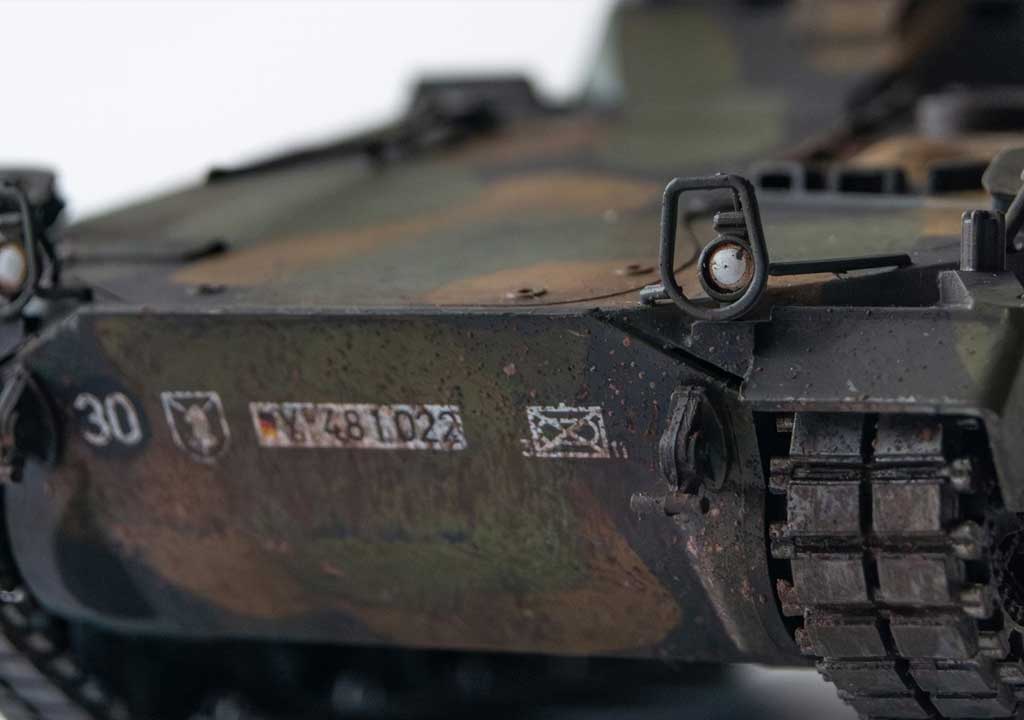
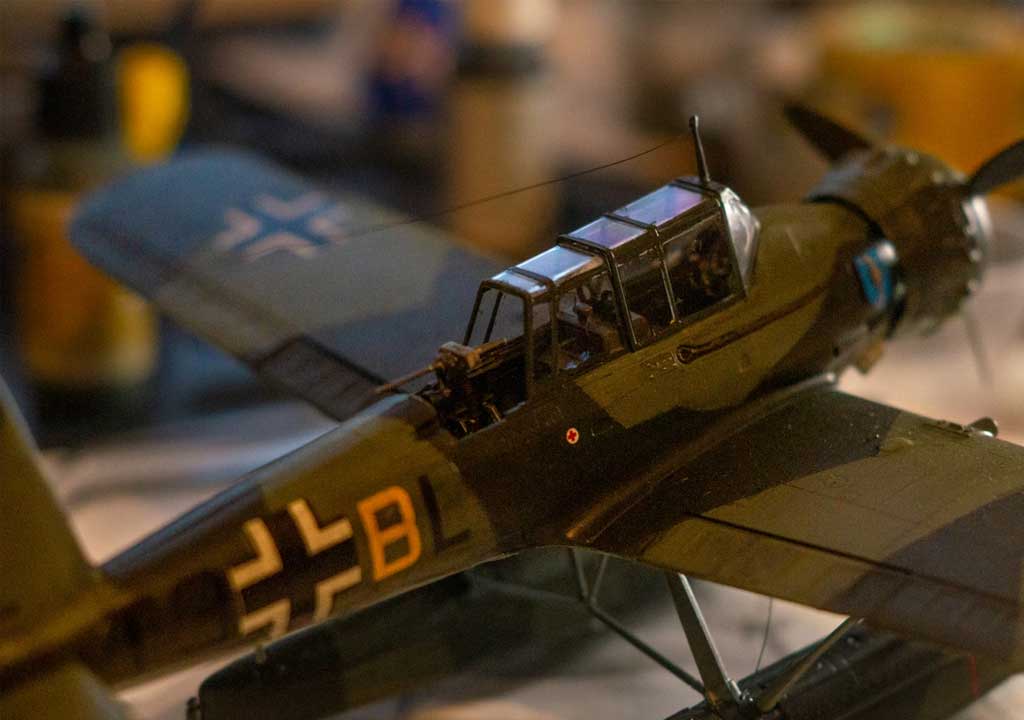
For sharp color boundaries, you can mask and apply two different colors with thin, precise coats. For subtle transitions, consider feathering: begin with the lighter color, then gradually introduce the darker shade at the edge and blend the boundary with a very light pass. Pre-shading (dark lines along panel lines or edges before painting) can add depth without sacrificing smoothness, particularly for aircraft canopies or vessel hulls.
When painting metallics or dark colors, be mindful of brush-induced scratches. If you see micro-scratches after a coat, a light polish with a soft cloth and polishing compound can help restore gloss on the surface before applying the final clear coat.
5. Brush painting and detail work
Airbrushing covers large areas, but brushes are indispensable for fine panel lines, edges, and small details. Brush work should be reserved for the finishing touches or delicate applications where masking would be difficult.
- Use high-quality, synthetic or natural bristles appropriate for your paint type. Softer bristles are better for finish coats; stiffer bristles handle pigments or enamels well.
- Thin the paint or varnish for brush application to prevent brush strokes from showing. A slightly runny consistency helps achieve a smoother surface when brushed.
- Brush with long, smooth strokes in the direction of the surface contours. Avoid painting back and forth over the same area repeatedly, which can create texture and unevenness.
- For panel lines, use a fine brush or a precise wash technique. If you're using washes to add depth, ensure the wash is thinned enough to settle into lines without running onto flat panels.
After brush applications, allow sufficient curing time. Even water-based acrylics can be tacky for a while, and brushing over a tacky surface can damage the finish. If you need to fix a spray error or catch light scuff marks, a quick, gentle buff with a micro-mesh pad can save the effort of respraying an entire area.
6. Finishing layers: clear coats and polishing
The final coats define the overall look-gloss, satin, or matte-and provide protection for the painted surface. Clear coats can be lacquer-based, acrylic, or enamel, each with its own handling requirements. The choice depends on your base paint system and desired final appearance.
Clear coat guidelines:
- Choose a clear coat compatible with your base color system. For acrylic bases, use an acrylic clear coat; for lacquers, choose lacquer clear; for enamels, enamel clear is appropriate.
- Apply multiple ultra-thin coats rather than a few thick coats. This reduces orange peel and allows for a more even finish. Wait for sufficient cure between coats as recommended by the manufacturer.
- When aiming for a glass-like finish, plan for a final high-gloss coat followed by careful polishing. For satin or semi-gloss finishes, a combination of light mist coats can build a smooth satin sheen.
- Polishing and buffing are optional but highly effective. After clear coats fully cure (often 24-72 hours depending on product), use micro-mesh or polishing compounds to remove micro-mears and achieve a near-perfect gloss. Always test on a spare part or inconspicuous area first.
Polishing sequence (typical): clear coat -> wait for full cure -> 1500-2000 grit wet sanding if necessary -> polish with fine polishing compound -> finish with a drop of oil or a dedicated glossy surface protectant. If you're aiming for a super-high gloss, you can follow polishing with a final glaze or wax designed for scale models to add depth and protection.
7. Troubleshooting common issues
Even experienced modelers encounter finish issues from time to time. Here are common problems and practical remedies:
Orange peel
Cause: Uneven spray flow, too high viscosity, or improper air pressure/distance.
Fixes:
- Thin the paint more or reduce air pressure slightly while maintaining a consistent distance.
- Spray in thinner coats with longer drying intervals between passes.
- Ensure the surface is clean and dry; dust or oils can create an uneven finish that resembles orange peel.
Dust nibs and particles in the finish
Cause: Poor ventilation, dusty environment, or insufficient surface protection.
Fixes:
- Spray in a clean, dust-free area; use a spray booth or a properly vented space with an efficient filtration system.
- Mask the model during curing and consider a light tack cloth wipe before clear coats.
- Seal with a very thin final coat to bury dust specks under the finish, followed by careful polishing.
Fisheyes
Cause: Contaminants on the surface (grease, silicone) or poor adhesion.
Fixes:
- Degrease surfaces and ensure there is no silicone contamination from masks or release agents.
- Use a dedicated surface cleaner, then re-prime before repainting the affected area.
Runs and sags
Cause: Too much paint applied in a single pass or paint drying too slowly in a warm environment.
Fixes:
- Stop applying more paint to the line; use a tack cloth to lift the excess while the coat is still slightly tacky or allow more time between coats to cure slightly.
- Respray with lighter passes and at a consistent distance, ensuring you're not applying a heavy coat in one go.
Cracking or crazing
Cause: Thick coats, incompatible varnishes, or substrate flex.
Fixes:
- Switch to thinner coats and ensure all products are compatible with the substrate and one another.
- Allow longer cure times between coats; avoid rapid changes in temperature that stress the finish.
8. Advanced techniques for depth and realism
Beyond a perfectly smooth base coat, there are many techniques to add realism without sacrificing gloss or smoothness. Here are a few popular methods used by scale modellers to achieve depth and interest while maintaining a flawless finish.
Pre-shading and post-shading
Pre-shading involves painting the panel lines and recessed areas with a dark color before applying the main color. The final color coats then blend over the dark lines, creating subtle panel depth. Post-shading uses lighter or darker shades applied after the base coat to add variation and weathering effects.
- Use thin lines for panel lines and recessed areas, especially on aircraft and armored vehicles. The goal is to create depth without visibly coloring the entire surface.
- Apply thin coats and let them dry thoroughly. The final color will blend with the shading, creating natural variation in tone.
Panel line washes and edge highlights
Panel line washes bring out details by pooling in the recesses and then wiping away from the surface. This technique accentuates rivets, seam lines, and panel edges without creating heavy edge lines that ruin the smooth finish.
- Use a wash color slightly darker than the base color and apply with a fine brush. After a short dwell time, wipe away excess with a lint-free cloth or cotton swab, leaving shading in the lines.
- Edge highlights (very fine) can be painted with a slightly lighter color on raised edges, followed by a careful blend to maintain a smooth overall finish.
Weathering while preserving gloss
Weathering can look convincing yet still maintain a glossy or satin topcoat. Techniques like dry brushing, subtle pigment powders, or controlled pigment washes, when done selectively, prevent a flat look while preserving surface smoothness. The key is restraint and gradual buildup, allowing the gloss coat to protect the delicately weathered surface beneath.
9. Maintenance and storage of tools for consistent results
Consistent results come from well-maintained tools and clean environments. Here are tips to keep your spray gear and paints performing optimally.
- Clean your airbrush immediately after use. Rinse with the appropriate solvent for your paint system, then spray through a cleaning tip with water or solvent to flush residual material.
- Keep uniform thinning ratios and record your settings for common colors. A small notebook or a note on your phone can save trial-and-error time on future projects.
- Store paints and reducers in airtight containers away from direct sunlight to prevent oxidation and color shift. Label with color names and ratios for quick reference.
- Maintain a clean, dust-free workspace. Wipe surfaces, oil-free gloves, and use tack cloths or anti-static wipes to reduce dust cling to freshly painted surfaces.
10. Safety considerations
Spraying paints, thinners, and clear coats can present health risks if proper precautions are not taken. Always work in a well-ventilated area or a dedicated spray booth, wear a suitable respirator or mask, eye protection, and gloves where appropriate. Use breathable PPE and avoid long-term exposure to fumes. Store all solvents in labeled containers and dispose of waste according to local regulations. Clearly separate your spray area from your living and workspaces to reduce accidental exposure and ensure children and pets cannot access hazardous materials.
11. A practical workflow: from prep to finish
Here's a practical, repeatable workflow that many modelers find effective for consistent smooth finishes:
- Prepare and repair the model: sand, fill, and mask as needed. Clean thoroughly.
- Apply primer with several ultra-thin coats. Let cure completely. Wet-sand lightly for a smooth base.
- Spray the base color in thin, even coats. Build up color gradually, allowing appropriate curing time between passes.
- Apply shading techniques (pre- or post-shading) if desired, with controlled passes to maintain smoothness.
- Apply a clear coat to seal the color work. Choose the clear coat type compatible with your base system.
- Wet-sand if necessary to remove dust nibs and minor imperfections. Re-spray any areas requiring touch-up.
- Polish or glaze to enhance gloss and depth if desired, ensuring compatibility with the final finish.
- Apply final protective top coat and allow full cure before handling or decals.
12. Decals, decals alignment, and how to avoid finish damage
Decals are often the last major step before the final clear coat. Proper decal application is essential to maintaining a smooth finish and avoiding micro-scratches or silvering.
- Apply a final gloss clear coat before decals to make the attachment and placement easier and to improve decal adhesion and positioning.
- Use setting solutions sparingly, applying sparingly and only as needed to avoid boning or dissolving the clear coat. Always follow with a protective clear coat after the decals have dried.
- Gently brush or airbrush a thin coat over the decal area to help seal the decal edge and reduce silvering once decals are fully dry.
13. Common mistakes and how to avoid them
Even with the best intentions, several common mistakes can derail a finish. Here are practical fixes and preventative tips:
- Avoid spraying in humid conditions when condensation may form on the surface. If possible, run a dehumidifier in your spray area and keep temperatures stable.
- Always test spray on a sacrificial piece or leftover part. This helps you catch issues before they ruin the model's finish.
- Never rush the cure times. Even if a coat feels dry to the touch, it may still be soft underneath. Allow the recommended cure times and handle carefully only after full cure.
- Store tools and paints in good condition. Dried or corroded tools will cause inconsistent spray patterns. Clean and maintain your equipment after every session.
- Choose the right finish for the project. A high-gloss base can be challenging to clear with a satin or matte topcoat if you're not prepared for the shift in texture. Plan your finish early and test combinations.
14. Your path to flawless finishes: practice and patience
Finally, remember that achieving flawless coats on scale models is a skill refined through practice. Each project teaches you more about your paints, your airbrush, and your studio conditions. Start with simpler schemes to build confidence, then move to more complex color blends and weathering. Keep notes on what works and what doesn't-your future self will thank you for the journal of experiments.
To summarize, here are the core takeaways for smooth, flawless finishes on scale models:
- Invest in solid surface prep: primer, fill, and sand until the surface is perfectly smooth.
- Choose compatible paint systems and thin appropriately for your nozzle size and climate.
- Apply ultra-thin coats with a steady hand and consistent distance; build up color gradually.
- Control the finishing steps with appropriate clear coats, then polish to the desired level of gloss.
- Address issues early with tested solutions and maintain your tools and environment.
- Incorporate shading, washes, and weathering thoughtfully to add depth without sacrificing smoothness.
Additional resources and learning paths
Beyond this guide, consider these avenues to deepen your mastery of smooth finishes:
- Modeling communities and forums with section on finishing techniques and product recommendations.
- Instructional videos from experienced modelers showing real-time spraying and finishing steps.
- Workshops or local hobby shops offering hands-on practice with guidance from experienced painters.
- Experiment with scrap materials and practice projects to test new paints, thinner ratios, and finish types without risking your main builds.
In the end, the smooth, flawless coat is a combination of good materials, careful technique, and a calm, methodical approach. By paying close attention to surface preparation, primer and paint compatibility, controlled application, and thoughtful finishing steps, you can achieve models that look as if they were cast in glass. Happy painting, and may your next model shine with a finish that truly does justice to the details beneath.
LIKED THIS ARTICLE? SHARE IT: